














TL;DR
- ICE agents killed Lorenzo Salgado Araujo in Texas and Joan Sebastian Guerrero in Maine within a week.
- Kamala Harris called for an immediate, independent and transparent investigation.
- DHS said officers feared for public safety, but key details remain disputed.
- Since September, agents have shot more than 20 people, with four fatal shootings.
- The deaths have renewed scrutiny of accountability in immigration enforcement.
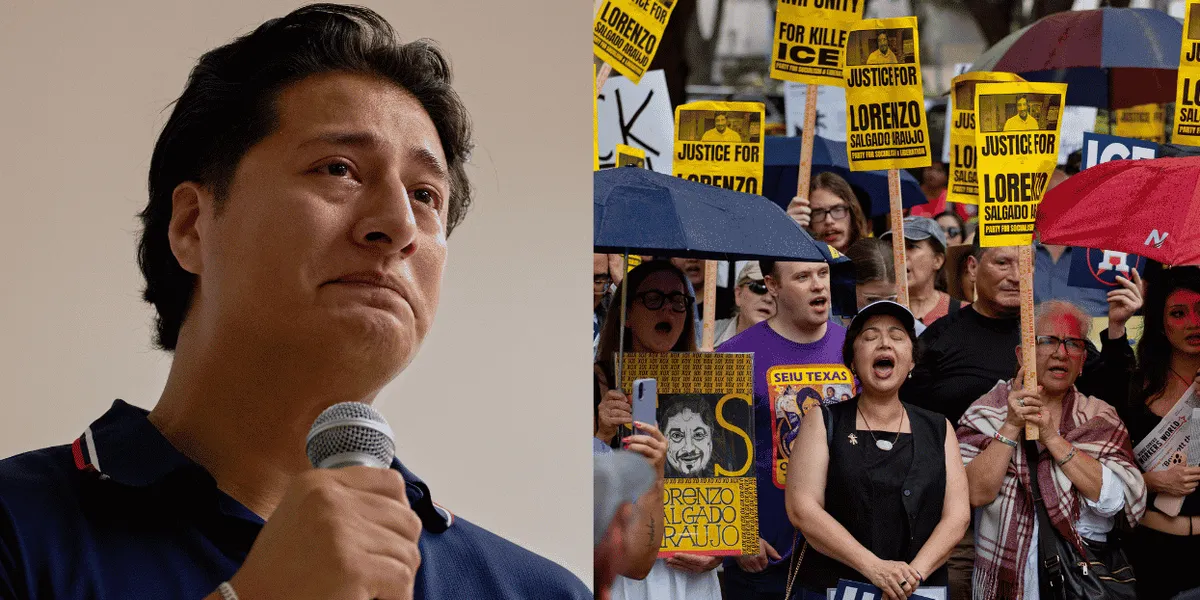
Communities in Texas, Maine and beyond are grappling with outrage and grief after two men were killed by ICE agents within a week in separate incidents that were not aimed at their victims, according to accounts cited by CNN and The Associated Press.
Last Tuesday, Lorenzo Salgado Araujo, a 52-year-old Mexican immigrant who had lived in the U.S. for 35 years, was shot during a traffic stop in Texas and later died at a hospital hours afterward. Then, on Monday morning in Maine, Joan Sebastian Guerrero, a 26-year-old Colombian man, was shot and killed by federal agents.
Former Vice President Kamala Harris called for an immediate inquiry after the latest killing.
“This cannot be acceptable in America,” Harris wrote on Bluesky. “There must be an immediate, independent, and transparent investigation. Anyone responsible for wrongdoing must be held accountable.”
Harris also wrote that Guerrero “should still be alive” and said the killing was the second in a week in which ICE agents had killed someone who, she said, was not the subject of the operation.
Details about Guerrero’s death remain limited. CNN reported that he lived with his partner and their 3-year-old daughter and was apparently heading to work when the shooting happened. A neighbor who helped identify him said, “He was a good person.” Surveillance footage obtained by The Associated Press appears to show Guerrero being shot after his car had been stopped, with agents then pulling his body from the vehicle and laying it on the ground.
CNN also reported that local officials are demanding a “full and impartial” investigation and that protests have broken out across the city since news of Guerrero’s death.
The Department of Homeland Security waited nearly 12 hours before releasing a statement that said an ICE officer fired because the officer feared for public safety, but it did not explain why Guerrero was considered a threat. There have also been conflicting accounts from Sen. Angus King’s office. The office first said the young father was the target of a warrant, then later acknowledged that Guerrero was “NOT the target of the warrant” after King spoke with DHS Secretary Markwayne Mullin.
In Texas, Homeland Security said Araujo tried to use his vehicle as a weapon, though no video or other evidence has been presented publicly to support that allegation. The department also said agents were looking for someone else when Araujo, who was driving a white van with three other men on the way to work, was shot. An agent fired into his abdomen. The agents involved were not wearing body cameras, according to the spokeswoman.
Araujo’s sons said at a news briefing last Wednesday that they believed their father tried to get away because he was being chased by unmarked cars. His oldest son, Ronaldo Salgado, and a growing number of elected officials and immigration advocates are demanding an independent investigation and accountability.
“This is outrageous to me, and this is ridiculous to hear that no one in that van was a target of any sort of investigation,” Salgado said after learning his father was not being sought by federal agents.
The shootings have added to a broader pattern of violent encounters between immigration officers and civilians. Since September, agents have shot more than 20 people, nearly all of them inside vehicles. Four of those incidents have now been fatal, including the January shootings of Renee Good and Alex Pretti in Minneapolis, which also triggered protests and public anger.
The latest deaths have intensified pressure on federal officials to explain how immigration operations are being carried out and when force is used. For immigrant communities and others watching closely, the cases have raised new concerns about accountability, transparency and the risks of enforcement tactics that can turn routine stops into deadly encounters.
Gallery

Alexander Rivera
Alex Rivera, a seasoned political journalist, brings over a decade of experience covering U.S. politics. An alumnus of Columbia University's Journalism School, Alex is known for insightful analyses of political trends a…
More stories →




Comments (0)
Join the conversation